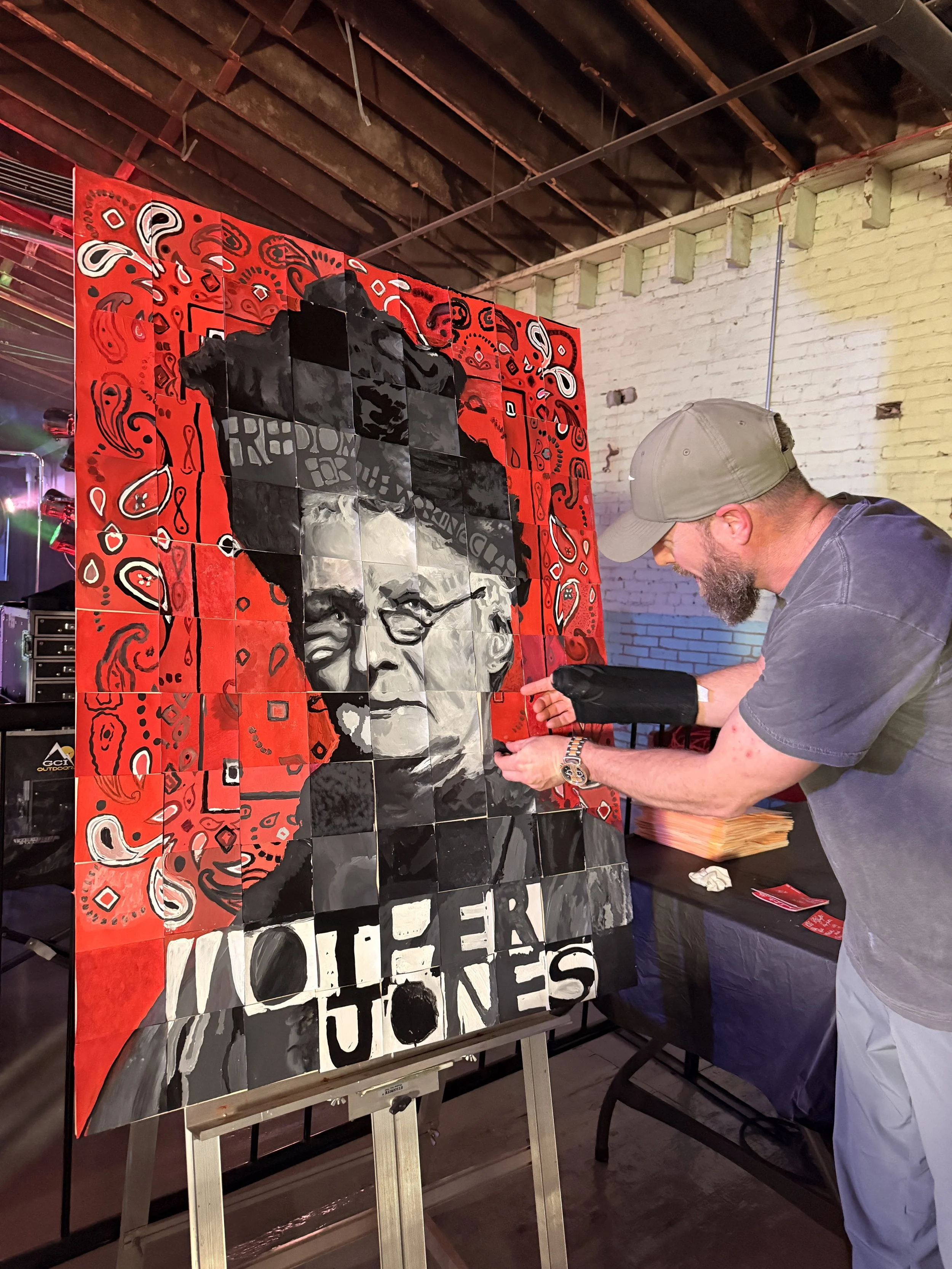
The last square!
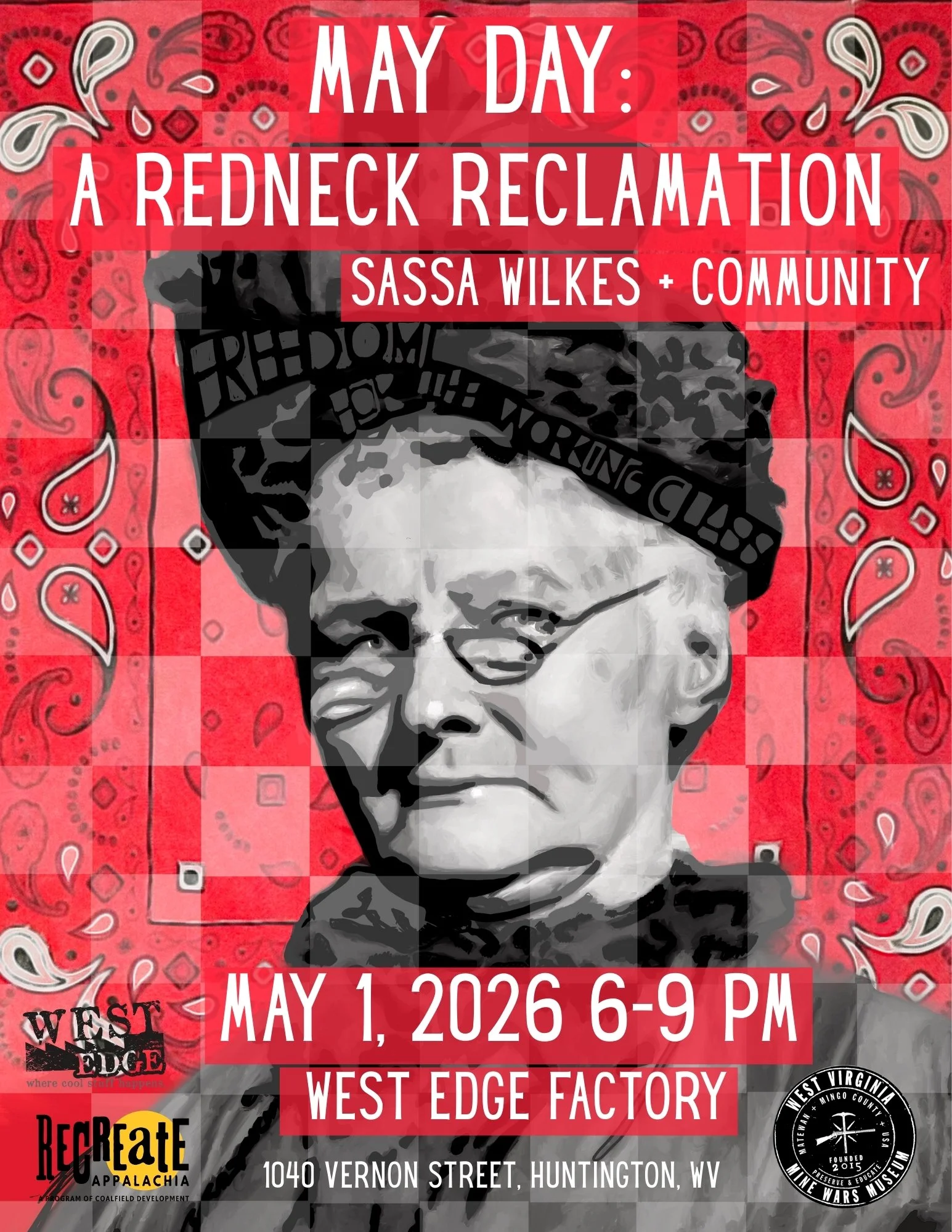
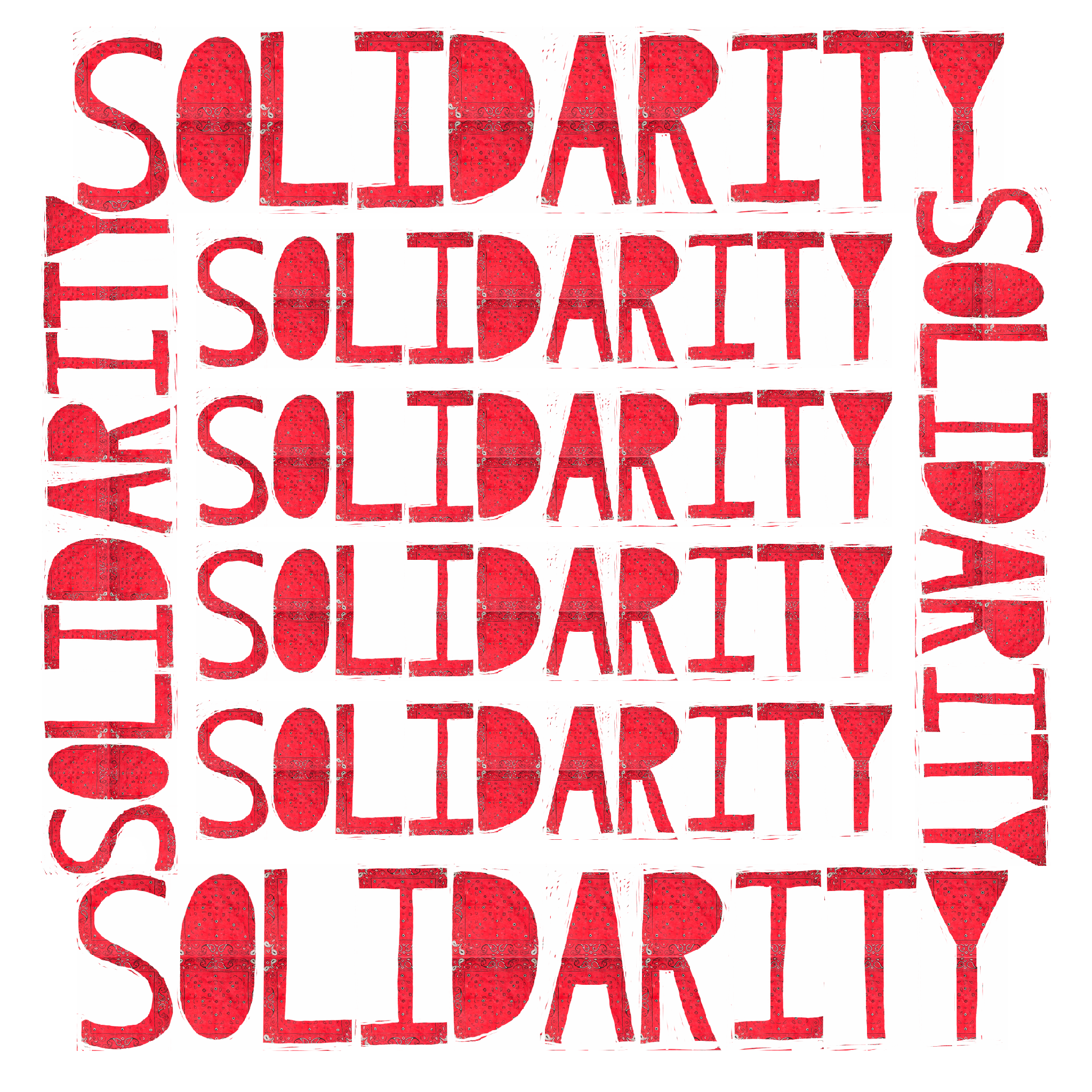
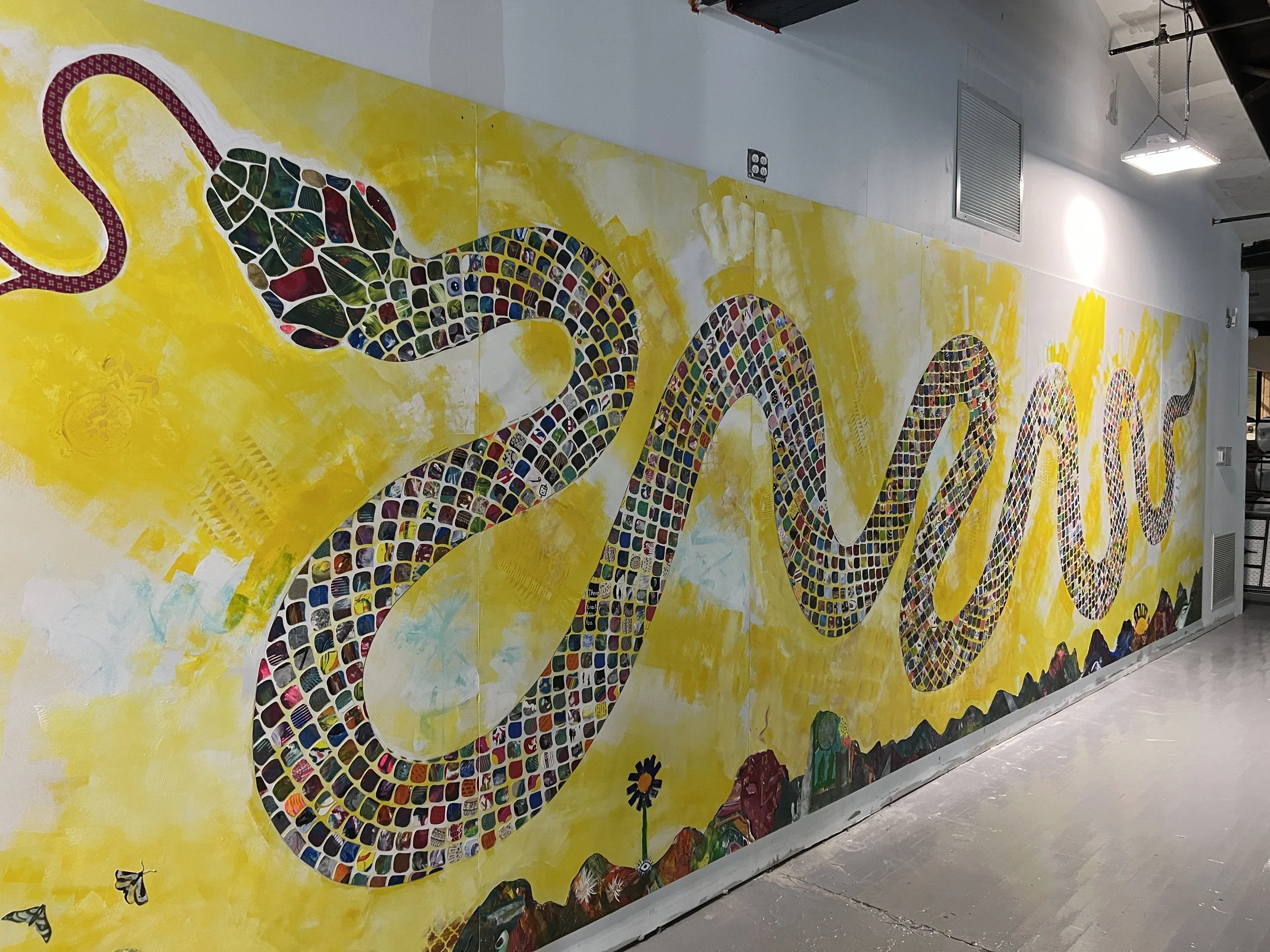
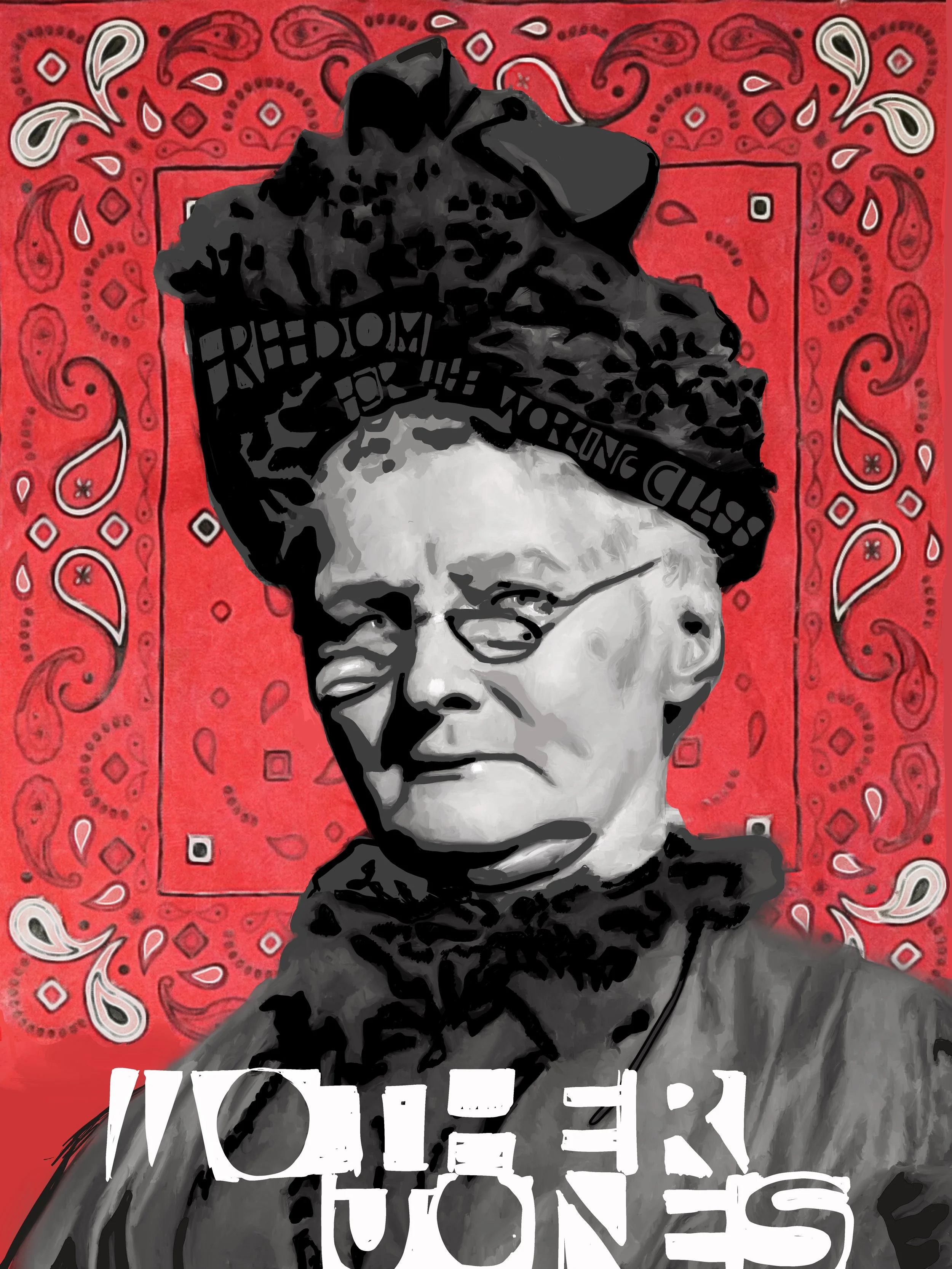
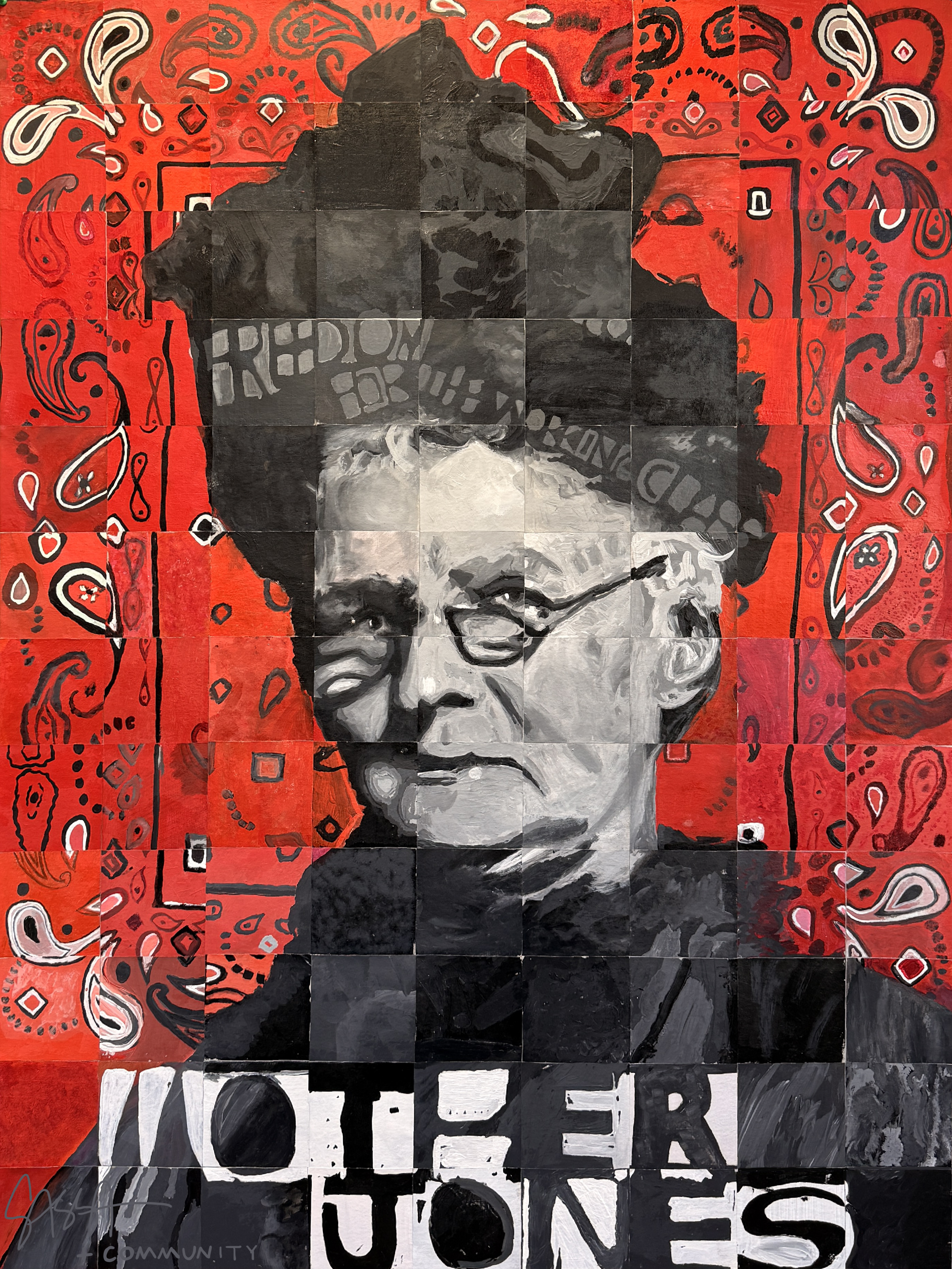
WE DID IT! The first portrait for the community mural SOLIDARITY is complete, and she is BEAUTIFUL! I knew it would be good, but this truly exceeded my expectations, and I am so excited for the rest of this mural to unfold throughout the year.
There is a trend here with me painting historical figures and taking the time to learn about them on my own rather than relying on what I was taught in school (which in the case of the WV Mine Wars, was next to nothing). The trend is that it makes me furious. I should have known these things growing up. Every West Virginian should know about these people and events. I come from a long line of miners who would have been directly affected by the work of organizers like Mother Jones, and I legitimately didn’t even know who she was until I painted her the first time in 2020.
I’ve written about her below to share a bit of her story, but I encourage everyone to learn more and share what you learn as we work on this mural! Feel free to comment here and share info and thoughts on social media posts.
Be a part of SOLIDARITY! Join me at the April First Saturday Art Market at West Edge Factory to contribute to portrait #2!
At a trial in 1902, West Virginia district attorney Reese Blizzard said of Mary Harris “Mother” Jones, “There sits the most dangerous woman in America. She comes into a state where peace and prosperity reign…crooks her finger, [and] twenty thousand contented men lay down their tools and walk out”.
Mother Jones sat in that courtroom as an immigrant who fled from Ireland during the Great Famine. A former schoolteacher. A widow and mother who lost her husband and four young children to yellow fever. A former dressmaker whose shop was destroyed in the Great Chicago Fire of 1871. She had been dealt lifetimes of hardship before she began the labor activism that would land her in courtrooms and behind bars.
Sewing dresses for wealthy people in Chicago gave Mary a clear picture of the extremes of wealth inequality, and of the contempt the super-rich often held for the poorest among them. After yellow fever took her family and the Great Chicago fire took her livelihood, Mary began attending meetings of the Knights of Labor. Listening to workers talk about their long hours, low pay, and the dangers they faced on the job was a catalyst for her transformation to Mother Jones.
By the late 1890s, she adopted her new name, a completely new persona, and a passion for fighting for the rights of coal miners and child laborers. She dressed in old-fashioned black dresses and claimed to be older than she was. She had a foul mouth and a voice that carried across fields full of miners and their families, putting into plain words the frustrations of the workers. People listened to Mother Jones, in part because she wasn’t your average agitator. Her sharp tongue contrasted with her grandmotherly appearance, and she lovingly referred to the miners as “her boys”.
She spoke of the enormous wealth the coal operators were creating for themselves on the backs of miners who were overworked, underpaid, and in danger every day. She rallied people against child labor, organizing entire communities to protest and march. In 1903, she led a famous march of child workers from Pennsylvania to the home of President Theodore Roosevelt in New York.
“In the Spring of 1903 I went to Kensington, Pennsylvania, where seventy-five thousand textile workers were on strike. Of this number at least ten thousand were little children. The workers were striking for more pay and shorter hours. Every day little children came into Union Headquarters, some with their hands off, some with the thumb missing, some with their fingers off at the knuckle. They were stooped things, round shouldered and skinny. Many of them were not over ten years of age, the state law prohibited their working before they were twelve years of age.
The law was poorly enforced and the mothers of these children often swore falsely as to their children’s age. In a single block in Kensington, fourteen women, mothers of twenty-two children all under twelve, explained it was a question of starvation or perjury. That the fathers had been killed or maimed at the mines.
I asked the newspaper men why they didn’t publish the facts about child labor in Pennsylvania. They said they couldn’t because the mill owners had stock in the papers.
“Well, I’ve got stock in these little children,” said I, “and I’ll arrange a little publicity.”
We assembled a number of boys and girls one morning in Independence Park and from there we arranged to parade with banners to the court house where we would hold a meeting. A great crowd gathered in the public square in front of the city hall. I put the little boys with their fingers off and hands crushed and maimed on a platform. I held up their mutilated hands and showed them to the crowd and made the statement that Philadelphia’s mansions were built on the broken bones, the quivering hearts and drooping heads of these children. That their little lives went out to make wealth for others. That neither state or city officials paid any attention to these wrongs. That they did not care that these children were to be the future citizens of the nation…
The trouble is that the fellers in Washington don’t care. I saw them last winter pass three railroad bills in one hour, but when labor cries for aid for the little ones they turn their backs and will not listen…I asked a man in prison once how he happened to get there. He had stolen a pair of shoes. I told him that if he had stolen a railroad he could be a United States Senator.
”
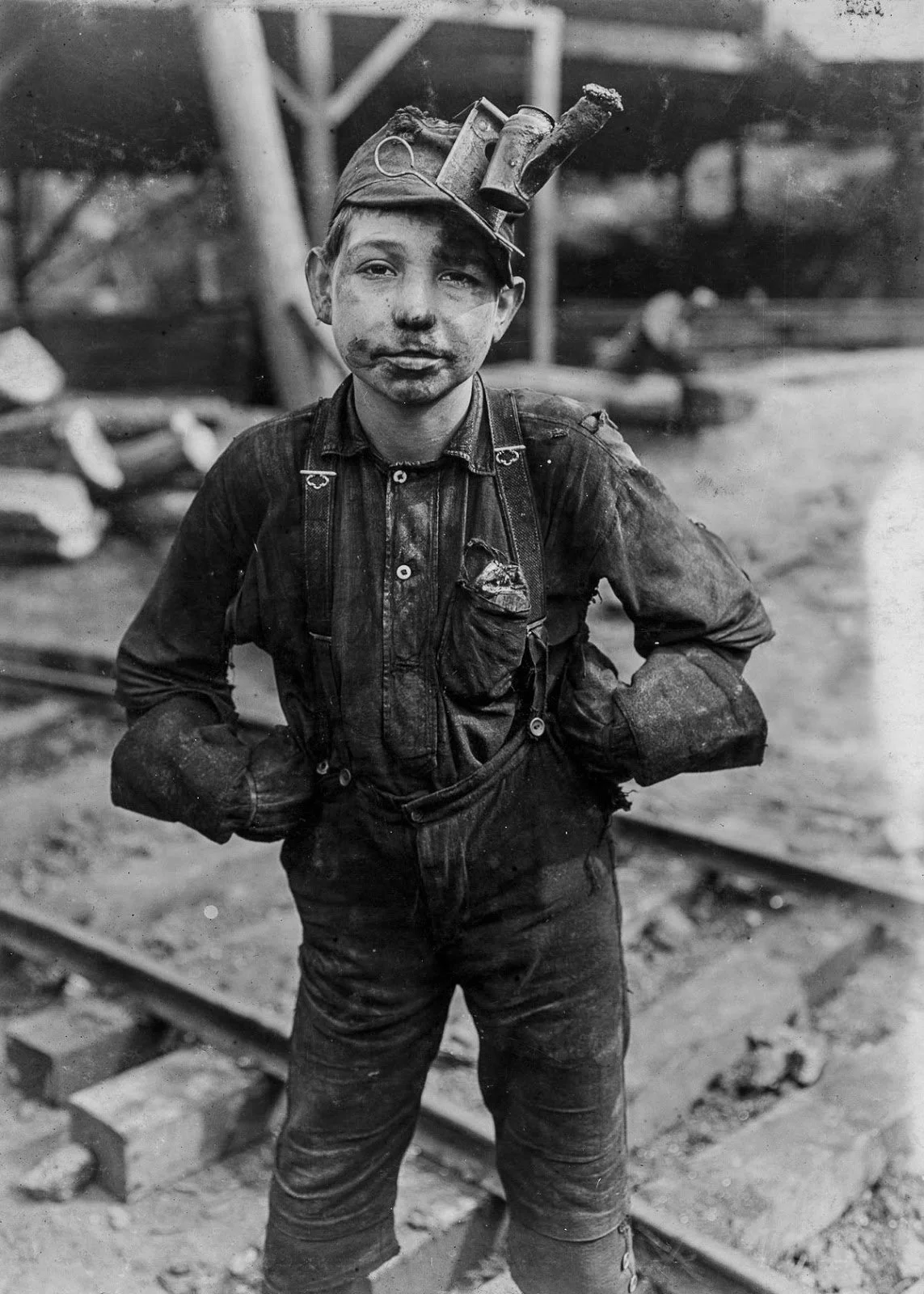
A tipple boy at Turkey Knob Mine in Macdonald, West Virginia. 1908. Photo by Lewis Hine.
Roosevelt refused to see Mother Jones and the children when they arrived and ignored her letters. But she felt the march had properly captured the nation’s attention regarding child labor. Not long after, Pennsylvania passed child labor laws prohibiting work before the age of fourteen.
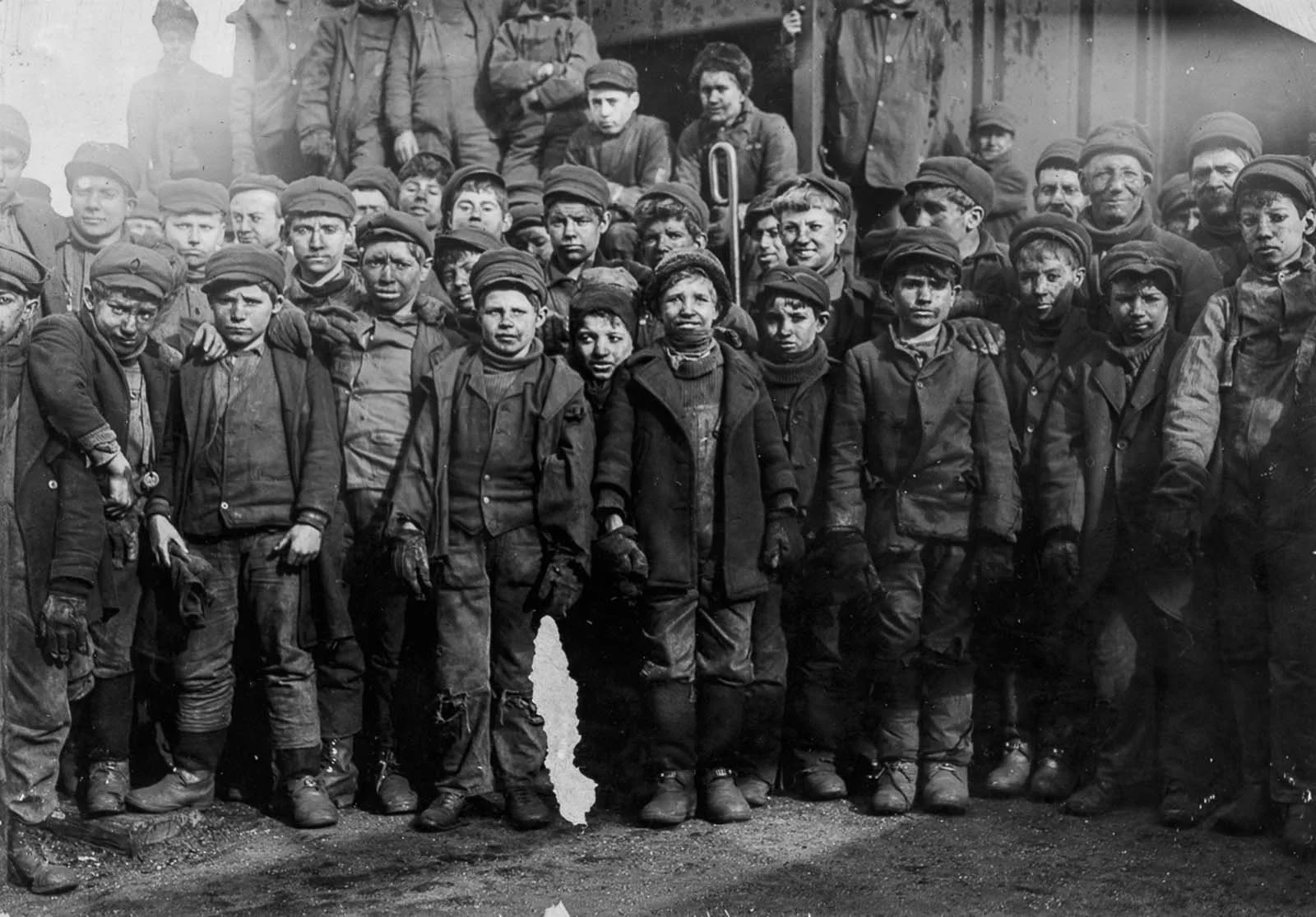
Breaker boys employed by the Pennsylvania Coal Company. 1911. Photo by Lewis Hine.
Mother Jones went wherever she was needed, and her travels brought her again and again to the coalfields of Appalachia. What happened here in West Virginia wasn’t just hard work or low wages. It was a system that kept people stuck. Miners were paid so little they couldn’t get by without depending on company housing and company stores, where prices were high and debt added up fast. The same companies controlled where you lived, where you shopped, and whether you could stay at all. If you spoke up or tried to organize, armed guards were there to make sure you understood the consequences.
By the time Mother Jones came to West Virginia during the Paint Creek and Cabin Creek strike in 1912, things had already turned violent. Miners and their families were being harassed, beaten, and pushed out of their homes into tent camps. Guards broke into houses, threatened women and children, and in some cases carried out brutal attacks. When miners fought back, they were treated like criminals in their own state. Martial law was declared. Men were arrested without fair trials.
And right in the middle of it was Mother Jones, already an old woman by then, marching with miners. She was arrested more than once, jailed, and even tried by a military court during a West Virginia mine strike. None of it slowed her down much. If anything it made her more famous and more determined.
She kept organizing well into old age, traveling from strike to strike and speaking wherever workers gathered. When she died in 1930 she was buried in a miners’ cemetery in Illinois among men who had died in a labor battle years earlier. It was exactly where she wanted to be, laid to rest beside the workers she spent her life fighting for.
For people in the coalfields, Mother Jones was never just a character in a history book. She was living proof that one stubborn voice could shake the powerful and give working people the courage to stand up for themselves.
Thank you, Mother Jones.
Learn more about the WV Mine Wars here: West Virginia Mine Wars Museum
“Sit down and read. Educate yourself for the coming conflicts.”
— Mary Harris “Mother” Jones